
How artificial intelligence is reshaping enterprise software in 2026 from intelligent automation and AI-powered ERP to predictive analytics, cybersecurity, and scalable cloud architectures.
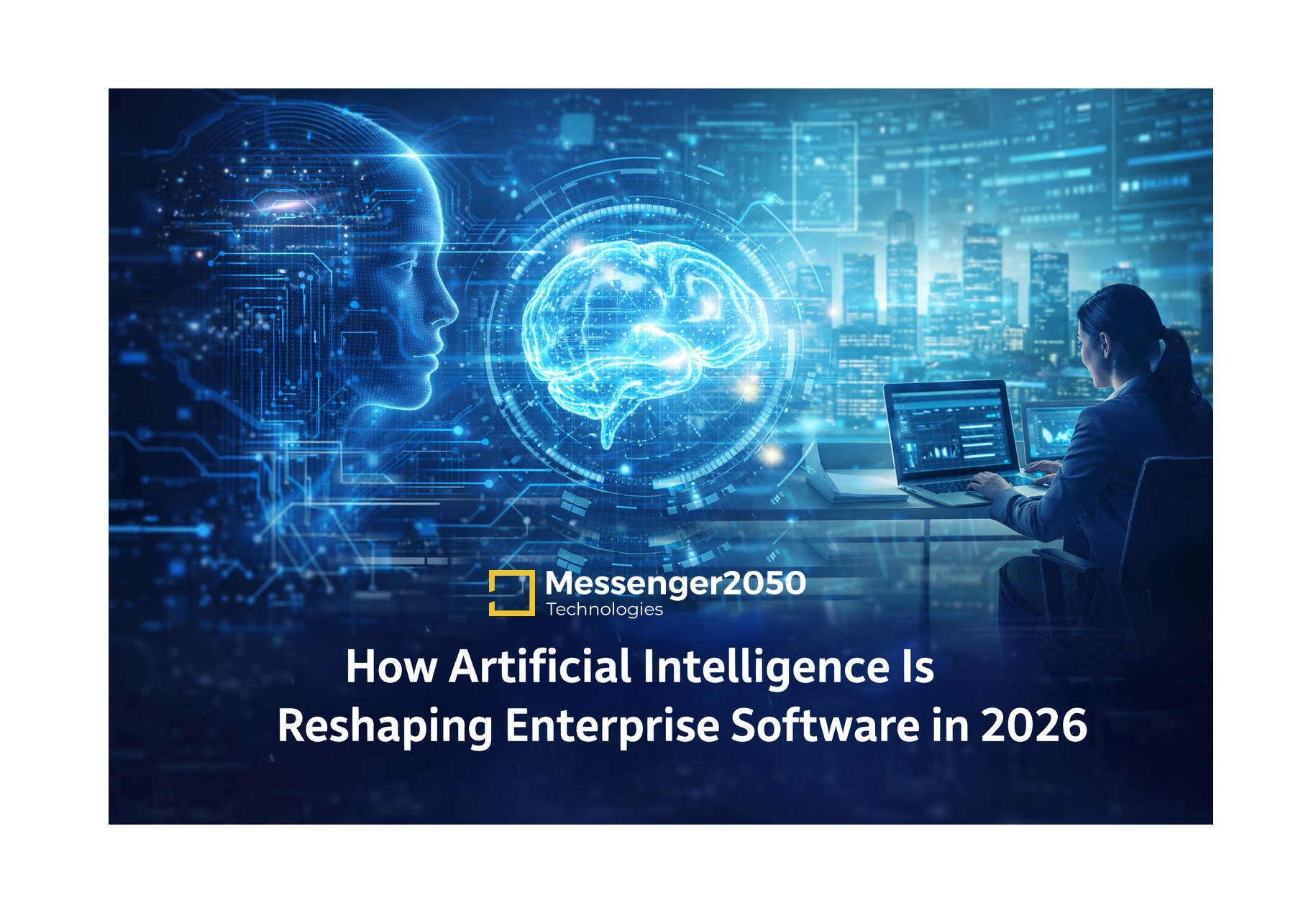
How Artificial Intelligence Is Reshaping Enterprise Software in 2026
Messenger2050 Technologies : Artificial Intelligence & Enterprise Software
Enterprise Software Enters the AI-First Era
By 2026, artificial intelligence is no longer an experimental layer in enterprise software it has become a core architectural component. Organizations across industries are moving beyond basic automation toward intelligent systems that can analyze data, predict outcomes, optimize workflows, and continuously learn from operations.
Enterprise software today is expected not just to support business processes, but to actively improve decision-making, efficiency, security, and customer experience. AI is the engine enabling this transformation.
From Rule-Based Systems to Intelligent Platforms
Traditional enterprise software relied heavily on predefined rules, static workflows, and manual inputs. While effective at scale, these systems struggled with adaptability, real-time insights, and complex decision logic.
In contrast, AI-driven enterprise platforms now offer:
- Adaptive workflows that evolve with business data
- Predictive analytics instead of reactive reporting
- Intelligent automation beyond basic task execution
- Continuous system optimization without manual intervention
This shift is redefining how enterprises design, deploy, and scale their digital systems.
Key Areas Where AI Is Transforming Enterprise Software
1. Intelligent Process Automation
AI-powered automation goes far beyond robotic process automation (RPA). In 2026, enterprise software uses AI to:
- Identify inefficiencies in workflows
- Optimize task sequencing automatically
- Detect anomalies in operational processes
- Reduce dependency on manual oversight
This results in faster operations, lower error rates, and improved scalability across departments.
2. Predictive Analytics & Decision Support
Modern enterprise platforms increasingly function as decision support systems. AI enables software to:
- Forecast demand, revenue, and resource requirements
- Identify risks before they materialize
- Recommend actions based on historical and real-time data
- Support executives with scenario modeling
Rather than generating static reports, AI-enabled systems provide actionable intelligence.
3. AI-Enhanced ERP & Business Platforms
Enterprise Resource Planning (ERP) systems are undergoing a major evolution. AI integration allows ERP platforms to:
- Automatically reconcile data across departments
- Optimize inventory and supply chain planning
- Predict cash flow and financial risks
- Improve human resource planning and workforce allocation
AI-driven ERP systems are becoming central nervous systems for digital enterprises.
4. Intelligent Customer Experience Systems
Enterprise software that interacts with customers CRM, helpdesk, support platforms now relies heavily on AI.
Key capabilities include:
- AI-powered chatbots and virtual assistants
- Sentiment analysis across customer interactions
- Predictive customer behavior modeling
- Automated ticket routing and resolution
This shift enables enterprises to deliver faster, more personalized, and more consistent customer experiences.
5. Software Security & Threat Intelligence
AI is playing a critical role in enterprise cybersecurity. Modern software platforms use AI to:
- Detect unusual behavior patterns
- Identify potential breaches in real time
- Automate incident response workflows
- Reduce false positives in security alerts
Security is no longer reactive; AI allows enterprise systems to become proactive and adaptive against threats.
AI-Driven Software Architecture in 2026
AI is influencing not just features but the core architecture of enterprise software:
- Microservices + AI models enable modular intelligence
- API-driven systems allow AI engines to integrate seamlessly
- Cloud-native platforms support scalable AI workloads
- Data-centric architecture ensures continuous learning
Enterprise software is increasingly designed with AI as a foundational layer, not an add-on.
Industry Use Cases Driving AI Adoption
Across industries, AI-enabled enterprise software is delivering measurable impact:
- Finance: Risk modeling, fraud detection, automated compliance
- Healthcare: Predictive diagnostics, patient flow optimization
- Logistics: Route optimization, demand forecasting
- Retail: Dynamic pricing, inventory intelligence
- IT & Infrastructure: Predictive maintenance, system optimization
These use cases demonstrate that AI is becoming a competitive necessity, not a differentiator.
Challenges Enterprises Must Address
Despite its benefits, AI adoption in enterprise software brings challenges:
- Data quality and governance issues
- Integration with legacy systems
- Ethical and regulatory considerations
- Skill gaps in AI engineering and data science
Successful enterprises approach AI implementation strategically aligning technology with business objectives and governance frameworks.
How Enterprise Software Providers Are Adapting
Technology companies and software development houses are responding by:
- Building AI-ready architectures from the ground up
- Offering AI integration into existing enterprise systems
- Embedding security and compliance into AI workflows
- Developing scalable, cloud-based AI platforms
This approach ensures enterprises can adopt AI without disrupting core operations.
The Road Ahead: AI as a Standard Enterprise Capability
By the end of 2026, AI will be considered a standard expectation in enterprise software similar to cloud computing today. Businesses that fail to adopt intelligent systems risk falling behind in efficiency, insight, and customer experience.
The future of enterprise software is not just digital it is intelligent, adaptive, and continuously evolving.
Conclusion
Artificial intelligence is reshaping enterprise software at every level—from architecture and automation to analytics and security. In 2026, successful enterprises are those that treat AI as a strategic capability rather than a standalone feature.
As organizations continue to modernize their digital infrastructure, AI-driven enterprise software will play a central role in shaping productivity, resilience, and long-term growth.